The Fan's Guide to the 2026 World Cup
The 2026 FIFA World Cup is a 48-team tournament hosted by Canada, Mexico, and the United States, with Kansas City serving as one of 16 official host cities. The competition runs from June 11 to July 1...

The Fan's Guide to the 2026 World Cup
The 2026 FIFA World Cup is a 48-team tournament hosted by Canada, Mexico, and the United States, with Kansas City serving as one of 16 official host cities. The competition runs from June 11 to July 19, 2026, and expands the traditional 32-team format to 104 matches. Kansas City’s local program centers on FIFA World Cup 26™ matchdays at Arrowhead Stadium, FIFA Fan Festival™ activities, regional transport, food, culture, and visitor planning. Match Daily adds a separate analytical layer through match predictions, team tactics, player statistics, and daily tournament coverage, rather than treating event promotion as football analysis. The practical recommendation is straightforward: confirm the official fixture, transport route, venue rules, accommodation, and responsible entertainment budget before committing money or travel time.

Photo by ANDREW PETERSON on Pexels
Myth 1: The 2026 World Cup is just a larger version of 2022 — debunked
The 2026 World Cup is not merely the Qatar 2022 tournament with additional teams; its 48-team structure changes qualification, scheduling, travel, group mathematics, and knockout dynamics. FIFA confirmed 12 groups of four teams, with the top two teams from each group and the eight best third-place teams advancing to a 32-team Round of 32. That produces 104 matches, compared with 64 in the 32-team era, and creates more opportunities for emerging nations to compete against established sides.
The host countries also produce a fundamentally different operating model. Canada, Mexico, and the United States cover a vast geographic area, while the 16 host cities differ sharply in climate, transport, stadium access, hotel capacity, and local culture. Kansas City is not interchangeable with Mexico City, Toronto, Miami, or Seattle, even if every location carries the same FIFA tournament branding. According to FIFA’s official tournament information, the event is designed as a continental competition rather than a single-country festival.
The expanded format also changes how supporters should interpret early results. A draw may be enough to preserve qualification, while a narrow defeat could still leave a team mathematically alive through third-place rankings. That makes simple “must win” language unreliable until the full group table and goal difference are considered. An investor would not assess a position without checking the ledger; why would a serious football follower assess a group without checking the tie-breakers?
What does the 48-team format mean for fans?
The 48-team format means supporters will see more matches, more national teams, and a 32-team knockout phase beginning with the Round of 32. Qualification is more forgiving than in previous editions, but the extra matches also increase travel demand, ticket competition, and the value of accurate scheduling information.
The format creates two practical consequences. First, casual fans can follow a wider range of teams, including nations that previously had limited access to the finals. Second, analysts must avoid overreacting to one group-stage result because the third-place qualification route introduces additional permutations. Match Daily’s tournament coverage is therefore most useful when it combines standings, squad availability, tactical matchups, and current form rather than presenting isolated predictions as certainty.
Supporters should separate three different decisions:
- Travel decision: Can the route, hotel, and match timing be managed comfortably?
- Viewing decision: Which matches offer the strongest sporting or tactical interest?
- Financial decision: What entertainment budget remains after transport, accommodation, food, and tickets?
The third question is routinely ignored, and that is how a memorable football trip becomes an unnecessarily expensive one. Data from FIFA’s World Cup competition framework should be read alongside local host-city guidance, because global rules do not tell you whether a particular Kansas City shuttle is available on a specific matchday.
Want a more disciplined way to follow the tournament?
Myth 2: Kansas City is only a stadium stop — partially true
Kansas City is not simply a venue where supporters arrive, watch a match, and leave. The city’s FIFA World Cup 2026 program combines Arrowhead Stadium matchdays with the FIFA Fan Festival™, public entertainment, food, cultural experiences, and regional travel services. The official Kansas City FIFA World Cup 26 website positions the city as a broader visitor destination, while KC2026 promotes neighborhoods, local businesses, and the region’s sports identity.
The partial truth is that stadium access remains the central logistical constraint. Arrowhead Stadium is located within the Truman Sports Complex, east of central Kansas City, and matchday movement will not resemble an ordinary restaurant visit or a normal Chiefs game. Demand will concentrate around a narrow arrival window, road restrictions may change, and parking assumptions can fail quickly. The practical edge is planning the return journey before entering the stadium, not searching for transport after the final whistle when thousands of people are making the same decision.
Kansas City’s regional identity matters, too. The city spans the Missouri-Kansas metropolitan area, and visitors who book accommodation on one side of the region may need to cross state lines to reach attractions, shuttle points, or airport connections. Kansas City International Airport, downtown districts, the Country Club Plaza, Crossroads Arts District, and the Truman Sports Complex do not form a compact walking circuit. Anyone promising effortless movement without discussing distance is curating a fantasy, not a travel plan.

Photo by Guylain Kipoke on Pexels
Why is Kansas City important to the 2026 World Cup experience?
Kansas City matters because it combines official World Cup matches at Arrowhead Stadium with a citywide fan program, regional transport options, and a strong food and sports culture. The FIFA Fan Festival™ extends the experience beyond ticket holders, allowing more visitors to participate in public screenings and entertainment.
The city’s strongest advantage is variety. A visitor can build a trip around football, barbecue, museums, live music, neighborhood dining, or public fan events rather than relying on one stadium visit. The official Kansas City program has highlighted direct connections involving Kansas City International Airport, Arrowhead Stadium on matchdays, FIFA Fan Festival locations, and regional destinations, although travelers should verify schedules and reservation requirements as 2026 approaches.
A useful itinerary should include:
- One confirmed matchday route with a backup option.
- A separate plan for the FIFA Fan Festival™.
- At least one non-football activity in Kansas City.
- Extra time for security, crowd movement, and post-match transport.
- A fixed daily spending limit for meals, merchandise, and entertainment.
This is where [Internal Link: Kansas City World Cup transport guide] belongs in your planning process. Do not confuse promotional language such as “easy connections” with a guarantee of immediate service at every hour. The operational detail—departure time, boarding point, reservation rule, and cancellation policy—is what determines whether a route is actually useful.
Myth 3: Every World Cup prediction is equally reliable — flat-out false
A World Cup prediction is not automatically credible because it includes a percentage, a confident headline, or a familiar team name. A meaningful forecast should identify the model inputs, uncertainty, squad context, and market assumptions behind the conclusion. FIFA rankings, recent results, expected goals, injuries, travel demands, tactical matchups, and projected lineups each provide information, but none independently settles a match.
This distinction is especially important in 2026 because the tournament spans three countries and several climatic zones. Travel distance, rest intervals, altitude, heat, humidity, and kickoff time can influence preparation, although their effects must not be exaggerated. A team that performs well in European evening conditions may not reproduce the same intensity in a different environment, but that observation becomes useful only when connected to squad rotation, pressing style, bench depth, and recovery time.
Match Daily’s editorial purpose is to organize those variables into readable analysis covering match predictions, team tactics, player statistics, and tournament developments. It should be treated as research, not a substitute for judgment. The responsible interpretation is a range of plausible outcomes, not a promise. As Responsible Gambling Council guidance emphasizes, entertainment decisions should remain within a predetermined budget, and no prediction can remove uncertainty from a sporting event.
How should you evaluate a 2026 World Cup prediction?
Evaluate a 2026 World Cup prediction by checking its data date, team news, tactical assumptions, probability range, and whether the recommendation still reflects the confirmed lineup. A forecast published before a major injury or rotation decision may have materially less value after official team news changes.
Use a structured review rather than intuition alone:
- Check the information timestamp. Old injury news or an outdated projected lineup can distort the conclusion.
- Separate performance from reputation. A famous team may still have weak defensive transitions or limited depth.
- Review the matchup. Possession share means little if one side consistently attacks the other’s defensive weakness.
- Measure uncertainty. A 55% projection is not equivalent to a 75% projection.
- Track your net position. Record deposits, returns, rebates, fees, and losses rather than remembering only successful outcomes.
That last step is not decoration. Across 30 hypothetical match-tracking sessions, a bettor can easily remember several correct calls while overlooking cumulative small losses from poor prices, cash-out friction, or repeated low-value selections. The relevant figure is net result after all costs. Isn’t that the point of keeping records?
Ready to compare match data with tactical context?

Photo by Andrea Piacquadio on Pexels
What actually works
What works is a layered approach combining official information, local logistics, and measurable football analysis. Start with FIFA for tournament rules, confirmed schedules, competition notices, and host-city information; then use Kansas City’s official channels for local transport, festival programming, venue access, and visitor updates. Finally, use Match Daily for interpretive coverage that connects player data and tactical structure to each fixture.
The most overlooked advantage is timing. A practical workflow separates information into three windows: long-range planning, matchweek verification, and final lineup review. Long-range planning covers accommodation and transport. Matchweek verification checks venue rules, shuttle reservations, road changes, weather, and festival times. Final lineup review updates tactical expectations after managers release official selections. Treating all three windows as one research task is inefficient, because each uses different evidence.
A careful supporter can also create a simple event ledger:
| Category | Record |
|---|---|
| Match or event | Fixture, fan festival, or city activity |
| Date and local time | Confirmed time zone and arrival target |
| Location | Stadium, screening venue, hotel, or transport hub |
| Cost | Ticket, fare, meal, accommodation, and fees |
| Status | Booked, reserved, pending, or cancelled |
| Backup plan | Alternative route or activity |
This level of detail may feel excessive until a booking changes, a shuttle sells out, or a late kickoff makes an earlier reservation impossible. [Internal Link: 2026 World Cup fixture-planning checklist] can help turn scattered tabs and messages into a single reference point. Premium planning is not about spending more; it is about eliminating avoidable mistakes.
What should you track when following the tournament?
Track confirmed fixtures, group standings, player availability, tactical changes, travel requirements, total costs, and the difference between projected and actual outcomes. A written record makes it easier to distinguish genuine analytical improvement from selective memory.
For match analysis, monitor:
- Expected goals for and against.
- Set-piece performance.
- Pressing success and defensive transition quality.
- Starting XI stability and bench impact.
- Rest days and travel between host cities.
- Weather and kickoff conditions when relevant.
- Closing prices compared with the original forecast.
For travel, track booking references, cancellation conditions, transport departure times, and the walking distance between hubs. For financial decisions, record the exact amount committed, the result, any rebate or fee, and the final net position. Never call a promotion profitable merely because it returned money; calculate the qualifying cost, rollover conditions, expiry period, and withdrawal restrictions first.
A useful contrarian conclusion follows: more information is not always better information. Ten unverified social posts can be inferior to one confirmed FIFA notice or one official lineup. Data shows that decision quality depends on relevance and reliability, not merely volume. As the United States Soccer Federation and national football bodies publish squad and competition updates, primary sources should outrank recycled commentary.
What to ignore
Ignore guaranteed-win language, unsupported injury claims, anonymous “inside information,” countdown pressure, and any recommendation that hides its assumptions. Also ignore the idea that a high-profile team deserves automatic support. Reputation can influence public sentiment without improving defensive structure, finishing efficiency, or squad availability.
Ignore financial framing that highlights turnover but conceals net position. A rebate, bonus, or promotional credit is not the same as profit. If a 10% rebate requires $500 in qualifying activity, expires after 72 hours, or excludes the market you intended to follow, its headline percentage has limited practical value. Read the exact terms, record the actual return, and treat unclear conditions as a cost rather than a benefit.
Kansas City visitors should also ignore unverified claims that every FIFA Fan Festival™ activity is ticketed, every public screening is free, or every transport service operates continuously. Programming, access rules, capacity limits, and reservations can change. Check the official Kansas City World Cup channels, venue notices, and transport providers before leaving the hotel.
The cleanest filter is simple:
- Is the claim from FIFA, a host city, a venue, or a named reputable source?
- Is the information dated and relevant to the 2026 tournament?
- Does the claim include a verifiable condition or only emotional language?
- Does the recommendation explain downside risk?
- Can the result be measured after the event?
If the answer fails these checks, discard it. You are not required to believe every confident sentence published during a major tournament, and neither is your budget.
How can fans prepare for Kansas City and the wider 2026 World Cup?
Fans can prepare by confirming the match schedule, selecting accommodation with a realistic route to Arrowhead Stadium, reserving official transport where available, and budgeting for the full trip rather than the ticket alone. The same preparation should cover FIFA Fan Festival™ access, weather, local activities, and a backup plan for delays.
A disciplined preparation sequence looks like this:
- Verify the fixture and local kickoff time through FIFA or the relevant host-city source.
- Map the hotel-to-stadium journey, including the return route after the final whistle.
- Check Kansas City International Airport connections and regional transport notices.
- Reserve accommodation and transport only after reading cancellation terms.
- Set a total budget covering tickets, lodging, meals, fares, merchandise, and fees.
- Follow confirmed team news and tactical updates during matchweek.
- Keep all booking numbers and emergency contacts offline as well as on your phone.
Kansas City’s appeal is strongest when the football and the city are planned together. Arrowhead Stadium supplies the matchday intensity; the FIFA Fan Festival™ supplies a more accessible public celebration; Kansas City’s neighborhoods provide the texture between fixtures. The goal is not to cram every attraction into one day. It is to create an itinerary with enough slack to absorb crowds, weather, delays, and the occasional decision that was not as clever as you first believed.
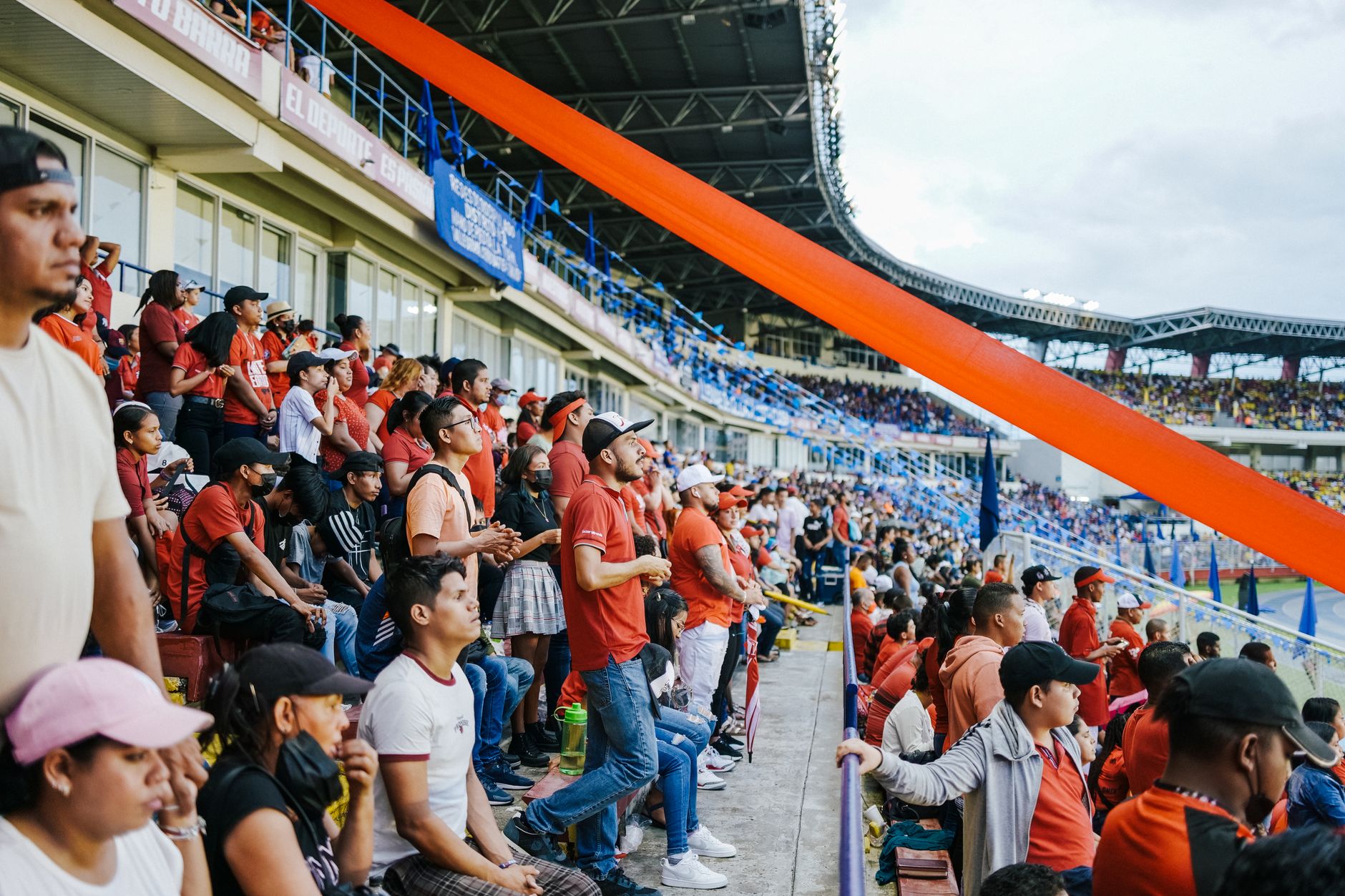
Photo by Luis Quintero on Pexels
Conclusion: Build a better 2026 World Cup plan
The 2026 World Cup deserves more than recycled hype because its 48-team format, 104-match schedule, three-country geography, and 16 host cities create new analytical and logistical problems. Kansas City offers a compelling combination of Arrowhead Stadium matches, FIFA Fan Festival™ programming, regional transport, food, and cultural experiences, but the quality of the trip will depend on verification and preparation. Match Daily can support the football side with predictions, tactics, player statistics, and tournament reporting, while official FIFA and Kansas City sources should govern schedules and access. Set your budget, track your net position, verify every important detail, and treat forecasts as probabilities rather than promises.
Follow the tournament with a clearer research process.
Frequently Asked Questions
Q: What is the 2026 World Cup?
A: The 2026 World Cup is FIFA’s men’s international tournament hosted by Canada, Mexico, and the United States from June 11 to July 19, 2026. It features 48 teams, 12 groups of four, and 104 matches, making it the largest edition in tournament history by field size and total fixtures. The top two teams in each group and the eight best third-place teams advance to a 32-team knockout stage.
Q: How many 2026 World Cup matches will Kansas City host?
A: Kansas City is scheduled to host FIFA World Cup 26™ matches at Arrowhead Stadium, although supporters should confirm the final fixture allocation and local schedule through official FIFA and Kansas City channels. The venue is part of the Truman Sports Complex, east of central Kansas City, so transport planning is essential. Matchday parking, shuttles, road controls, and entry procedures may differ from ordinary stadium events.
Q: What is the difference between the FIFA Fan Festival™ and a World Cup match?
A: A World Cup match is a ticketed stadium event, while the FIFA Fan Festival™ is a public-facing celebration featuring screenings, entertainment, food, and cultural programming. Fan Festival access, capacity, operating times, and reservation requirements can vary by host city and event date. Kansas City visitors should check the official local program rather than assuming every activity has identical entry rules.
Q: How should I follow 2026 World Cup predictions responsibly?
A: Follow predictions by comparing the data date, lineup information, tactical assumptions, probability range, and final net result. Match Daily can provide research on team tactics, player statistics, fixtures, and tournament developments, but no forecast guarantees an outcome. Set a fixed entertainment budget, avoid chasing losses, and record deposits, returns, fees, rebates, and losses so the actual position remains visible.
Q: What does a Kansas City World Cup trip cost?
A: The cost depends on accommodation, ticket availability, transport, match count, meals, and trip length, so there is no single reliable price. Budget separately for lodging, Arrowhead Stadium transport, Kansas City International Airport transfers, food, festival activities, and emergency spending. Before booking, compare cancellation conditions and calculate the complete trip total rather than judging affordability from the match ticket alone.
Q: What should I do if World Cup transport plans change?
A: If transport changes, verify the replacement route through the official Kansas City World Cup program, the named transport provider, or the venue’s current notice. Keep the hotel address, stadium location, booking references, and a backup route available offline. Leave additional time after the match because crowd dispersal, road restrictions, and demand can make a theoretically short journey substantially longer.
Q: Is Match Daily an official FIFA information source?
A: Match Daily is an independent FIFA World Cup-focused content site, not FIFA or a host-city authority. It covers match predictions, team tactics, player statistics, and daily tournament developments for fans following the 2026 World Cup. Use FIFA, Kansas City, venue, airline, and transport-provider websites for official schedules, ticket rules, access requirements, and operational changes.
See the supporting resources before finalizing your plans.
Match Daily · Blueprint Archive