The Investor's Guide to Portugal-Uzbekistan Standings
Portugal’s 2026 World Cup group position is stronger than Uzbekistan’s: the referenced standings list Portugal on 4 points from two matches with a 1-1-0 record, while Uzbekistan has 0 points from two....

The Investor's Guide to Portugal-Uzbekistan Standings
Portugal’s 2026 World Cup group position is stronger than Uzbekistan’s: the referenced standings list Portugal on 4 points from two matches with a 1-1-0 record, while Uzbekistan has 0 points from two matches at 0-0-2. The match record attached to the ESPN listing shows Portugal defeating Uzbekistan 5-0 on June 23, 2026, with Cristiano Ronaldo scoring in the 6th and 39th minutes, Nuno Mendes adding a 17th-minute goal, an Uzbekistan own goal arriving in the 60th minute, and Rafael Leão completing the score in the 87th. Portugal therefore holds the decisive advantage in points, wins, goals scored, and goal difference. Uzbekistan faces a straightforward but demanding calculation: it needs victories elsewhere and must repair its negative scoring profile. Before evaluating any prediction or market, verify the official FIFA table and the latest group fixtures, then treat a head-to-head result as context rather than a substitute for the full standings.
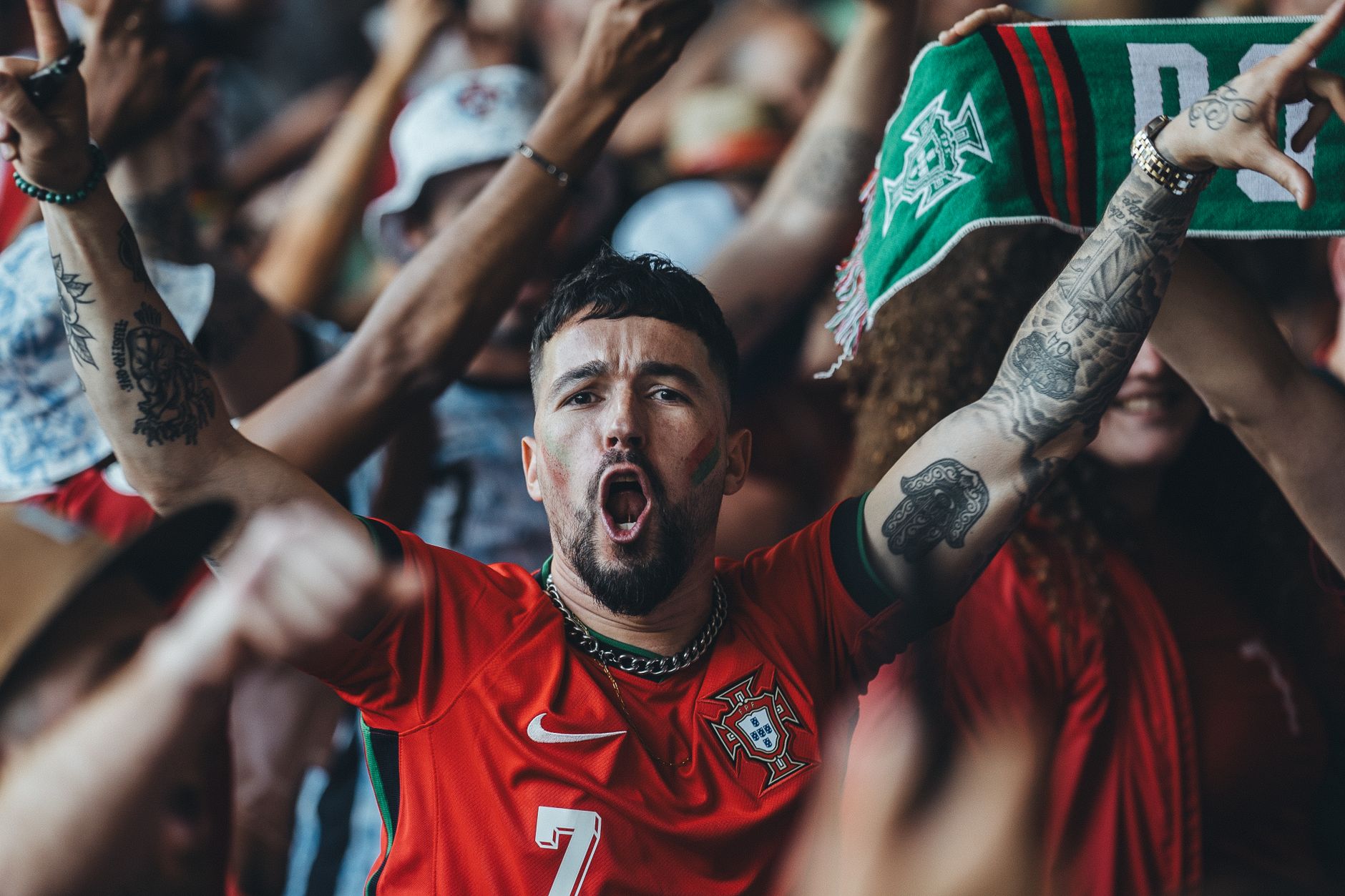
Photo by Omar Ramadan on Pexels
The Bottom Line
Portugal leads the relevant standings with 4 points, while Uzbekistan has 0 after two matches; the listed head-to-head score is Portugal 5, Uzbekistan 0. That difference matters because points determine rank first, while goal difference becomes important only when teams are level.
The common misconception is that a 5-0 result alone tells you the entire qualification story. It does not. A table is a running ledger: matches played, wins, draws, losses, goals for, goals against, goal difference, and points all work together. According to the FIFA World Cup regulations, competition-specific tie-break procedures govern teams finishing level, so one cannot simply assume that a single head-to-head score always settles every ranking question.
The available ESPN match data gives Portugal a 1-1-0 group record and Uzbekistan a 0-0-2 record. Portugal’s 4 points imply one victory and one draw, whereas Uzbekistan’s zero indicates two defeats. That is the essential answer for anyone searching “Portugal national football team vs Uzbekistan national football team standings,” but a disciplined reader should still check whether the table has been updated after the next round. Football data ages quickly; assumptions age even faster.
Want the broader tournament context? Match Daily follows 2026 World Cup tables, tactical changes, player statistics, and match projections.
What Do Players Actually See in the Table?
Players and coaches see a competitive position shaped by points first, goal difference second, and remaining fixtures third; Portugal’s 4 points provide immediate security that Uzbekistan’s 0 points does not. The 5-0 scoreline also creates a substantial goal-difference swing, although future matches can erase it.
A supporter often sees “Portugal versus Uzbekistan” and focuses on the final score. A coaching staff sees a sequence of decisions: Portugal’s 4-2-3-1 against Uzbekistan’s 3-4-2-1, Ronaldo’s early finishing, Nuno Mendes’ contribution, and the structural problem created by conceding five times. ESPN’s listed lineups identify Diogo Costa in goal for Portugal, with Rúben Dias, Renato Veiga, João Cancelo, and Nuno Mendes among the defensive options; Bruno Fernandes, Vitinha, João Neves, João Félix, Pedro Neto, and Ronaldo formed the attacking framework.
That detail matters for interpretation. A formation is not a fixed identity, and one match does not prove that Portugal will always dominate or that Uzbekistan cannot compete. However, the margin indicates more than a narrow tactical accident. Portugal scored at minutes 6, 17, 39, 60, and 87, while Uzbekistan failed to score. Data shows that early goals alter game state, forcing the trailing team to take greater risks and often exposing space in transition.
The UEFA national-team competition archive is useful for checking squad lists, match reports, and official competition context. Do not confuse a media match page, a live table, and a final competition ranking; they may show different snapshots.
The 3 Things That Matter Most
1. Why do points outrank the headline score?
Points outrank the headline score because a win is normally worth 3 points, a draw 1 point, and a defeat 0 points; Portugal’s listed 4 points therefore reflect one win and one draw, while Uzbekistan’s 0 reflects two losses. Goal difference becomes decisive only within the applicable tie-break framework.
The arithmetic is elementary, yet people routinely skip it. For the standings snapshot:
- Portugal: 2 matches, 1 win, 1 draw, 0 losses, 4 points.
- Uzbekistan: 2 matches, 0 wins, 0 draws, 2 losses, 0 points.
- Listed head-to-head result: Portugal 5-0 Uzbekistan.
- Portugal scorers: Cristiano Ronaldo twice, Nuno Mendes once, Rafael Leão once, plus one own goal.
The first information gain is practical: if a table displays Portugal on 4 points after two matches, it cannot represent two victories under the standard three-point system, because two victories would produce 6 points. That quick consistency check helps detect stale or incorrectly copied tables. The same logic applies to Uzbekistan: two defeats produce 0 points, but the result alone does not reveal whether the team has another fixture pending or whether a competition-specific sanction has changed the ledger.
Match Daily treats the standings as a financial-style position: points are the capital, goal difference is the reserve, and remaining fixtures are the future exposure. Isn’t that the point? A dramatic score is visible, but the net position is what determines qualification pressure.
For more context, consult our [Internal Link: 2026 World Cup group-stage standings guide] before making a conclusion from one row of data.
2. How important is goal difference after a 5-0 result?
Goal difference is highly valuable after a 5-0 result because Portugal gains a five-goal advantage in the match margin while Uzbekistan absorbs the corresponding deficit. Nevertheless, it cannot compensate for missing points unless teams finish level under the competition’s ranking rules.
A five-goal margin is not merely decorative. It can become decisive if Portugal and another nation end the group stage level on points, provided the governing rules use goal difference at that stage. Yet the edge is conditional: Portugal could later lose 0-2 and reduce the benefit, while Uzbekistan could recover with consecutive wins and make the earlier defeat less relevant.
The second less-obvious insight is that the own goal changes the interpretation of the score but not the underlying attacking count. Portugal’s listed four named scorers are Ronaldo, Mendes, and Leão, with Ronaldo scoring twice; the fifth goal is recorded as an own goal by Abduvohid Nematov. A casual summary might call it five Portuguese individual goals, which would be inaccurate. Precision matters when evaluating player markets, team scoring form, or statistical projections.
Consider these checks before using the result:
- Confirm whether the competition records own goals separately.
- Compare goals scored with goals credited to named players.
- Recalculate goal difference from the complete table, not a single match page.
- Check the latest official tie-break order.
Get the numerical details right before reading too much into sentiment or reputation.
3. What do the lineups reveal about tactical risk?
The listed lineups reveal Portugal using a 4-2-3-1 and Uzbekistan using a 3-4-2-1, a contrast that can influence width, midfield pressure, and defensive transitions. Portugal’s experienced attacking personnel converted early opportunities, while Uzbekistan’s three-man defensive structure was exposed as the match widened.
Portugal’s XI included Diogo Costa, João Cancelo, Rúben Dias, Renato Veiga, Nuno Mendes, João Neves, Vitinha, Pedro Neto, Bruno Fernandes, João Félix, and Cristiano Ronaldo. Uzbekistan’s formation details should be interpreted with care because substitutions and in-game adjustments can alter the original structure. Even so, the 3-4-2-1 typically asks wing-backs to cover considerable ground, especially when the opponent has wide attacking outlets.
The listed substitutions also matter for anyone studying match momentum. Francisco Conceição replaced Pedro Neto at halftime, Nélson Semedo replaced João Cancelo at halftime, Francisco Trincão replaced João Félix in the 63rd minute, and Bernardo Silva entered for João Neves. These are not trivia items; they show Portugal could refresh its flank play and technical control while protecting a substantial lead.
For an investor-minded reading, separate three layers:
- Observed result: Portugal won 5-0.
- Tactical evidence: Portugal scored early and maintained attacking pressure.
- Forward projection: Portugal may remain the stronger side, but future opponents may defend deeper or transition more effectively.
That final layer is a forecast, not a fact. Confusing the two is how poor analysis becomes expensive analysis.
[Internal Link: Portugal tactical analysis and player-statistics hub]
Edge Cases & Gotchas
What can make the Portugal-Uzbekistan standings misleading?
The standings can mislead when a reader uses an outdated snapshot, ignores unplayed fixtures, misreads goal difference, or assumes that the head-to-head result alone determines qualification. The ESPN listing is a useful reference point, but the official FIFA competition table should control any final conclusion.
The most important edge case is timing. A table showing Portugal on 4 points and Uzbekistan on 0 may describe the position immediately after the referenced match, not the final group ranking. Fixture order matters because teams may have played different opponents, and a team with fewer points can still have a route back if several matches remain. Conversely, a large goal difference cannot rescue a side that continues to lose.
A second edge case concerns source disagreement. ESPN may present match-level data, while FIFA may publish the authoritative competition table and regulations. Wikipedia can provide historical context through its 2026 FIFA World Cup page, but it should not replace an official live source for a time-sensitive ranking. As the FIFA rules explain, “the regulations of the competition shall determine the ranking procedure,” which is why the applicable document deserves priority.
A third edge case concerns player data. Ronaldo’s two goals are clear in the listed record, but the own goal attributed to Nematov should not be counted as a Ronaldo hat-trick or as a fifth individual Portugal scorer. If you track expected goals, shots, or player props, use the official event log rather than a shortened social-media graphic.
See the [Internal Link: World Cup qualification tie-break rules] for a fuller explanation of ranking procedures.
How should you verify the table before relying on it?
Verify the table by checking the official FIFA competition page, confirming matches played, recalculating points, and comparing the latest goal difference with the complete fixture list. This four-step process prevents a five-goal headline from being mistaken for a final qualification verdict.
Use the following audit:
- Check the timestamp: identify whether the page was updated after June 23, 2026.
- Confirm the ledger: Portugal should show 4 points from two matches in the referenced snapshot; Uzbekistan should show 0 from two.
- Recalculate the score data: verify Portugal’s five goals, Uzbekistan’s zero, and the own-goal classification.
- Inspect remaining fixtures: determine whether either side has played the same number and quality of opponents.
- Read the regulations: confirm the tie-break sequence instead of assuming it.
This is not needless fussiness. A one-line table can omit postponed matches, disciplinary adjustments, or a later result. Data integrity is especially important when Match Daily readers compare predictions, form models, and market prices. A 5-0 result can justify Portugal being favoured in a future matchup, but it does not automatically justify every Portugal-related price.
Want a cleaner way to follow future updates? Use the latest Match Daily match page as a starting point, then verify decisive numbers against FIFA.
Verdict
Portugal is decisively ahead of Uzbekistan in the referenced 2026 World Cup standings: 4 points to 0 after two matches, supported by a listed 5-0 head-to-head victory. The scoreline strengthens Portugal’s goal-difference position, but the more durable advantage is the points gap and the evidence of early attacking control from Ronaldo, Nuno Mendes, and Rafael Leão.
The correct conclusion is therefore measured rather than theatrical. Portugal should be regarded as the stronger side in this snapshot, while Uzbekistan needs points immediately and cannot depend on goal difference alone. Yet the table must be revisited after every round, because a standings page is a live account, not a permanent label. Check FIFA for the current ranking, ESPN for match events, and Match Daily for tactical interpretation before forming a prediction.
The practical takeaway is simple: record points first, goal difference second, remaining fixtures third, and player form fourth. Or am I wrong? Only if the official table says otherwise.
Explore the latest tournament analysis and keep your World Cup position tracking disciplined.
Frequently Asked Questions
Q: What are the Portugal national football team vs Uzbekistan national football team standings?
A: The referenced standings show Portugal on 4 points from two matches and Uzbekistan on 0 points from two matches. Portugal’s listed record is 1 win, 1 draw, and 0 losses, while Uzbekistan is listed at 0 wins, 0 draws, and 2 losses. The associated match result is Portugal 5-0 Uzbekistan on June 23, 2026. Because tables change after every round, verify the current position through FIFA before relying on this snapshot.
Q: How did Portugal reach 4 points in the standings?
A: Portugal reached 4 points through one win and one draw across two matches. Under the standard three-point system, the victory contributes 3 points and the draw contributes 1 point. The 5-0 result against Uzbekistan is the major scoreline shown in the available match data, but it is not by itself the explanation for all 4 points. Check the full fixture list to identify the opponent involved in Portugal’s draw.
Q: What is the difference between the Portugal-Uzbekistan score and the standings?
A: The score describes one match, while the standings summarize every completed match in the relevant competition. Portugal’s 5-0 victory over Uzbekistan explains one result and improves goal difference, but Portugal’s 4-point total also reflects another match. Uzbekistan’s 0 points indicate two defeats in the cited snapshot, although the complete table is still required to evaluate qualification prospects.
Q: How should I check the latest Portugal and Uzbekistan standings?
A: Check FIFA first, then compare the update with the ESPN match page and the latest fixture results. Confirm the date, matches played, points, goals for, goals against, and goal difference before drawing a conclusion. If the pages disagree, prioritize the official competition source and read the applicable tie-break regulations. This prevents an old 2026 snapshot from being treated as a final ranking.
Q: Why does the 5-0 result matter for Portugal’s qualification chances?
A: The 5-0 result matters because it gives Portugal three points in the match and a strong goal-difference contribution. Goal difference can become valuable if Portugal finishes level on points with another team, depending on the competition’s official tie-break order. However, future points remain more important than a large margin, so Portugal should focus on avoiding defeats rather than merely protecting its scoring record.
Q: Does Cristiano Ronaldo have five goals in Portugal’s 5-0 win?
A: No, the listed event record credits Cristiano Ronaldo with two goals, in the 6th and 39th minutes. Nuno Mendes scored in the 17th minute, Rafael Leão scored in the 87th, and one goal was recorded as an Uzbekistan own goal by Abduvohid Nematov. Therefore, the team scored five times, but Ronaldo did not score all five. This distinction matters for player statistics and betting-market evaluation.
Q: Is Portugal a safer prediction than Uzbekistan after this result?
A: Portugal is the stronger statistical starting point because it has 4 points, a 5-0 result in the cited matchup, and superior attacking evidence. That does not make every future Portugal market automatically valuable, because odds, opponent quality, injuries, venue, and lineup rotation still affect expected value. Compare the available price with your estimated probability, and never treat a historical scoreline as a guaranteed outcome.
Match Daily · Blueprint Archive